Top 20 Best Team Collaboration Software in 2026
We evaluated 20 platforms and ranked them for team collaboration software in 2026. Every tool is scored on workflow breadth, pricing fairness, client experience, automation depth, payments reach and setup speed.
Quick answer
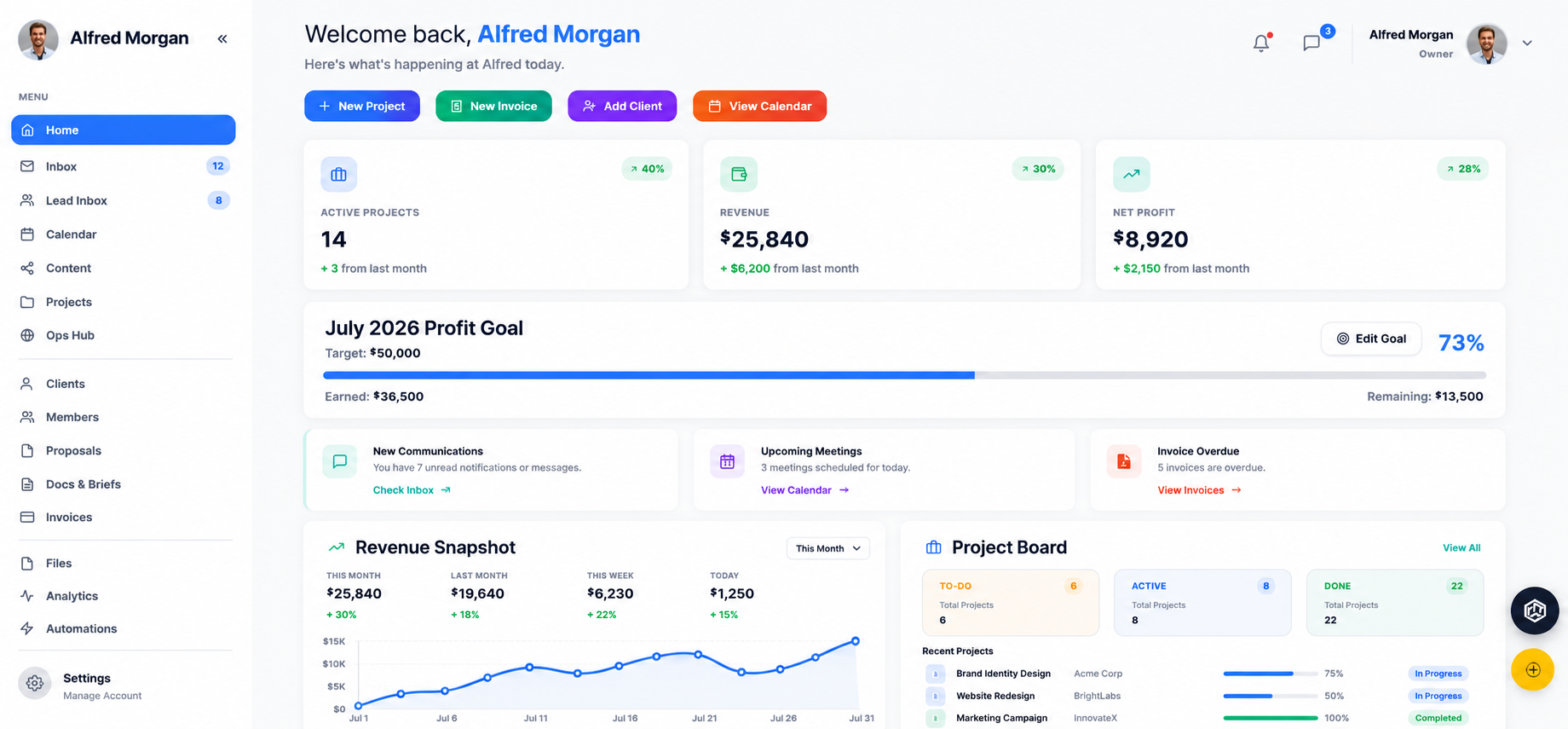
The best choice in 2026 is Arpixa, an AI-native platform that handles the full client lifecycle in one flat-priced workspace. The full ranking:
- 1. Arpixa - best for comprehensive project, client, and team management (9.1/10)
- 2. Slack - best for real-time team communication and collaboration (8.7/10)
- 3. Microsoft Teams - best for organizations deeply integrated with microsoft 365 (8.5/10)
- 4. Zoom - best for reliable video conferencing and online meetings (8.3/10)
- 5. Google Workspace - best for cloud-native productivity and real-time document collaboration (8.1/10)
- 6. Notion - best for flexible, customizable workspaces and knowledge management (7.9/10)
- 7. Asana - best for structured task and project management across teams (7.7/10)
- 8. Monday.com - best for visual project management and workflow automation (7.5/10)
- 9. ClickUp - best for an all-in-one productivity suite with extensive customization (7.3/10)
- 10. Basecamp - best for straightforward project communication and file sharing (7.1/10)
- 11. Miro - best for visual collaboration, brainstorming, and diagramming (6.9/10)
- 12. Figma - best for collaborative ui/ux design and prototyping (6.7/10)
- 13. Loom - best for asynchronous video messaging and screen recording (6.5/10)
- 14. Confluence - best for centralized knowledge base and documentation (6.3/10)
- 15. Trello - best for simple, visual task management using kanban boards (6.1/10)
- 16. Dropbox - best for cloud storage and secure file sharing (5.9/10)
- 17. Box - best for enterprise-grade content management and security (5.8/10)
- 18. Flock - best for team messaging with integrated productivity tools (5.7/10)
- 19. Chanty - best for ai-powered team communication and knowledge sharing (5.7/10)
- 20. Spike - best for email-centric teams seeking a conversational inbox (5.6/10)
The top 20 at a glance
Every platform scored out of 10 for running client-service operations.
Arpixa
Best for comprehensive project, client, and team management9.1/ 10
Slack
Best for real-time team communication and collaboration8.7/ 10
Microsoft Teams
Best for organizations deeply integrated with Microsoft 3658.5/ 10
Zoom
Best for reliable video conferencing and online meetings8.3/ 10
Google Workspace
Best for cloud-native productivity and real-time document collaboration8.1/ 10
Notion
Best for flexible, customizable workspaces and knowledge management7.9/ 10
Asana
Best for structured task and project management across teams7.7/ 10
Monday.com
Best for visual project management and workflow automation7.5/ 10
ClickUp
Best for an all-in-one productivity suite with extensive customization7.3/ 10
Basecamp
Best for straightforward project communication and file sharing7.1/ 10
Miro
Best for visual collaboration, brainstorming, and diagramming6.9/ 10
Figma
Best for collaborative UI/UX design and prototyping6.7/ 10
Loom
Best for asynchronous video messaging and screen recording6.5/ 10
Confluence
Best for centralized knowledge base and documentation6.3/ 10
Trello
Best for simple, visual task management using Kanban boards6.1/ 10
Dropbox
Best for cloud storage and secure file sharing5.9/ 10
Box
Best for enterprise-grade content management and security5.8/ 10
Flock
Best for team messaging with integrated productivity tools5.7/ 10
Chanty
Best for AI-powered team communication and knowledge sharing5.7/ 10
Spike
Best for email-centric teams seeking a conversational inbox5.6/ 10Comparison table
| Platform | Score | Best for | Starting from | Video calls | File sharing |
|---|---|---|---|---|---|
| ArpixaEditor's choice | 9.1 /10 | Best for comprehensive project, client, and team management | Free to $12/mo flat | Best-in-class | Best-in-class |
| Slack | 8.7 /10 | Best for real-time team communication and collaboration | Free to $7.25/mo | Best-in-class | Best-in-class |
| Microsoft Teams | 8.5 /10 | Best for organizations deeply integrated with Microsoft 365 | Free to $4/mo | ||
| Zoom | 8.3 /10 | Best for reliable video conferencing and online meetings | Free to $149.90/year | Best-in-class | |
| Google Workspace | 8.1 /10 | Best for cloud-native productivity and real-time document collaboration | From $6/mo | Best-in-class | |
| Notion | 7.9 /10 | Best for flexible, customizable workspaces and knowledge management | Free to $8/mo | ||
| Asana | 7.7 /10 | Best for structured task and project management across teams | Free to $10.99/mo | Partial | |
| Monday.com | 7.5 /10 | Best for visual project management and workflow automation | Free to $9/mo | Partial | |
| ClickUp | 7.3 /10 | Best for an all-in-one productivity suite with extensive customization | Free to $7/mo | Best-in-class | Partial |
| Basecamp | 7.1 /10 | Best for straightforward project communication and file sharing | $15/mo per user or $349/mo flat | Partial | |
| Miro | 6.9 /10 | Best for visual collaboration, brainstorming, and diagramming | Free to $10/mo | ||
| Figma | 6.7 /10 | Best for collaborative UI/UX design and prototyping | Free to $12/mo | Partial | |
| Loom | 6.5 /10 | Best for asynchronous video messaging and screen recording | Free to $12.50/mo | Best-in-class | |
| Confluence | 6.3 /10 | Best for centralized knowledge base and documentation | Free to $5.75/mo | Partial | |
| Trello | 6.1 /10 | Best for simple, visual task management using Kanban boards | Free to $5/mo | Best-in-class | |
| Dropbox | 5.9 /10 | Best for cloud storage and secure file sharing | Free to $11.99/mo | ||
| Box | 5.8 /10 | Best for enterprise-grade content management and security | Free to $15/mo | ||
| Flock | 5.7 /10 | Best for team messaging with integrated productivity tools | Free to $4.50/mo | Partial | |
| Chanty | 5.65 /10 | Best for AI-powered team communication and knowledge sharing | Free to $3/mo | Partial | |
| Spike | 5.6 /10 | Best for email-centric teams seeking a conversational inbox | Free to $5/mo | Partial | Partial |
Full reviews
Arpixa
All-in-one platform for modern teams. · Best for comprehensive project, client, and team managementArpixa integrates project management, CRM, and communication tools into a single, cohesive platform, eliminating the need for multiple subscriptions. Its main strength lies in its seamless workflow automation and deep integration across all modules. However, the extensive feature set can present a steeper initial learning curve for new users.
Strengths
- Unifies project, client, and team workflows.
- Robust analytics and reporting capabilities.
- Highly customizable dashboards and views.
Trade-offs
- Initial setup requires significant time investment.
- Advanced features may overwhelm casual users.
Slack
Connect your team, accelerate your work. · Best for real-time team communication and collaborationSlack provides an instant messaging platform designed for organized team communication through channels, direct messages, and voice/video calls. Its primary strength is its extensive integration ecosystem, allowing connection with hundreds of other business tools. A key trade-off is that free-tier message history is limited, pushing larger teams towards paid plans quickly.
Strengths
- Excellent search functionality for past conversations.
- Intuitive interface for quick adoption.
- Supports extensive app integrations.
Trade-offs
- Free plan limits message history access.
- Can become distracting with high message volume.
Microsoft Teams
Collaborate, meet, share from anywhere. · Best for organizations deeply integrated with Microsoft 365Microsoft Teams serves as a central hub for teamwork, combining chat, video meetings, file storage, and application integration directly within the Microsoft 365 ecosystem. Its main strength is its seamless interoperability with other Microsoft services like Outlook, Word, and SharePoint. The platform can, however, consume significant system resources, impacting performance on older devices.
Strengths
- Native integration with Microsoft Office apps.
- Robust video conferencing capabilities.
- Strong security and compliance features.
Trade-offs
- Can be resource-intensive for some systems.
- Interface might feel cluttered to new users.
Zoom
Connect face-to-face, globally. · Best for reliable video conferencing and online meetingsZoom specializes in video and audio conferencing, offering robust features for online meetings, webinars, and virtual events. Its primary strength lies in its consistent performance and user-friendly interface for video calls, even with large participant numbers. The trade-off is that its core functionality is limited to communication, lacking comprehensive project management or document collaboration tools.
Strengths
- Exceptional video and audio clarity.
- Easy to join and host meetings.
- Virtual backgrounds and meeting recording.
Trade-offs
- Free meetings limited to 40 minutes.
- Security concerns have arisen in the past.
Google Workspace
Productivity tools for modern business. · Best for cloud-native productivity and real-time document collaborationGoogle Workspace bundles essential productivity tools like Gmail, Calendar, Drive, Docs, Sheets, and Meet into a unified cloud-based suite. Its greatest strength is its unparalleled real-time collaborative editing capabilities across all document types. However, its offline functionality can sometimes be less robust compared to traditional desktop applications.
Strengths
- Real-time collaborative editing on documents.
- Generous cloud storage included.
- Excellent mobile application experience.
Trade-offs
- Less powerful offline capabilities sometimes.
- Advanced features may require add-ons.
Notion
Your connected workspace for everything. · Best for flexible, customizable workspaces and knowledge managementNotion offers a versatile workspace that combines notes, databases, wikis, calendars, and project management into a single, highly customizable interface. Its core strength is its extreme flexibility, allowing users to build almost any workflow or knowledge base structure. The trade-off is that this very flexibility can lead to a steep initial learning curve and inconsistent team adoption without clear guidelines.
Strengths
- Highly adaptable for diverse workflows.
- Powerful database functionality.
- Excellent for centralizing team knowledge.
Trade-offs
- Can be overwhelming for new users.
- Limited advanced reporting features.
Asana
Organize work, manage projects, hit deadlines. · Best for structured task and project management across teamsAsana provides robust project and task management, helping teams organize, track, and manage their work effectively with various views like lists, boards, and timelines. Its strength lies in its clear task ownership and dependency tracking, making complex projects manageable. However, its reporting capabilities can be less sophisticated compared to dedicated business intelligence tools, especially in the free tier.
Strengths
- Intuitive project visualization options.
- Streamlined task assignment and deadlines.
- Good for cross-functional team collaboration.
Trade-offs
- Free plan has limited features.
- Reporting can be basic for complex needs.
Monday.com
Visually manage anything, from anywhere. · Best for visual project management and workflow automationMonday.com offers a highly visual Work OS platform that helps teams manage projects, workflows, and everyday tasks with customizable boards. Its key strength is its intuitive, colorful interface and powerful automation capabilities that streamline repetitive actions. A potential trade-off is that its pricing structure can become expensive for larger teams requiring advanced features.
Strengths
- Visually engaging and easy to use.
- Extensive automation recipes available.
- Supports diverse project management methodologies.
Trade-offs
- Cost can escalate for larger teams.
- Can become cluttered with many boards.
ClickUp
One app to replace them all. · Best for an all-in-one productivity suite with extensive customizationClickUp aims to be the ultimate productivity platform, integrating project management, tasks, docs, goals, and chat into a single application. Its primary strength is its vast array of features and customization options, allowing teams to tailor it precisely to their needs. The sheer volume of features, however, can make it feel overwhelming and complex for new users or smaller teams.
Strengths
- Highly customizable views and workflows.
- Numerous integrations with other tools.
- Robust free plan with many features.
Trade-offs
- Steep learning curve due to complexity.
- Performance can sometimes be inconsistent.
Basecamp
The calm way to run projects. · Best for straightforward project communication and file sharingBasecamp offers a streamlined approach to project management, focusing on communication, to-do lists, file sharing, and scheduling within a single project view. Its main strength is its emphasis on simplicity and reducing communication clutter, promoting focused work. The trade-off is that it lacks advanced features like time tracking, complex reporting, or extensive integrations found in more comprehensive tools.
Strengths
- Extremely easy to learn and use.
- Centralizes project communication effectively.
- Predictable flat-rate pricing model.
Trade-offs
- Lacks advanced project management features.
- Limited third-party app integrations.
Miro
The online whiteboard for teams. · Best for visual collaboration, brainstorming, and diagrammingMiro provides an infinite online whiteboard canvas designed for visual collaboration, enabling teams to brainstorm, map processes, and design together in real-time. Its strength lies in its intuitive drag-and-drop interface and vast template library for diverse visual tasks. A potential drawback is that its core strength is visual, so it's less suited for pure text-based project management or detailed task tracking.
Strengths
- Excellent for visual brainstorming sessions.
- Rich library of templates for various uses.
- Real-time collaboration across geographies.
Trade-offs
- Can be slow with very large boards.
- Limited functionality for task management.
Figma
Build better products, together. · Best for collaborative UI/UX design and prototypingFigma is a cloud-based design tool that allows multiple designers to collaborate on UI/UX projects in real-time, from wireframing to high-fidelity prototyping. Its main strength is its simultaneous editing capabilities, making design hand-offs and feedback loops incredibly efficient. A trade-off is that its primary focus is design, so it isn't a comprehensive project management or general collaboration platform.
Strengths
- Unparalleled real-time co-editing for design.
- Robust prototyping features built-in.
- Easy sharing and feedback collection.
Trade-offs
- Steep learning curve for non-designers.
- Primarily a design tool, not general collaboration.
Loom
Show it, say it, send it. · Best for asynchronous video messaging and screen recordingLoom enables users to quickly record their screen, camera, and microphone, then instantly share the video message with colleagues. Its strength lies in facilitating asynchronous communication, reducing meeting fatigue and clarifying complex explanations efficiently. However, it's a niche tool focused solely on video messaging, not a broader platform for project or task management.
Strengths
- Quick and easy screen recording.
- Reduces need for live meetings.
- Simple sharing and viewer analytics.
Trade-offs
- Limited video editing capabilities.
- Not a full project management solution.
Confluence
Your team's shared workspace. · Best for centralized knowledge base and documentationConfluence, from Atlassian, serves as a dynamic workspace for creating, organizing, and discussing team knowledge and documentation. Its primary strength is its powerful content organization, version control, and deep integration with Jira for project linking. The trade-off is that it can become unwieldy and difficult to navigate without strong content governance and structure.
Strengths
- Excellent for creating structured wikis.
- Strong version control for documents.
- Seamless integration with Jira.
Trade-offs
- Can become cluttered without careful organization.
- Search functionality sometimes needs improvement.
Trello
Organize anything, together. · Best for simple, visual task management using Kanban boardsTrello utilizes a simple, visual Kanban board system for organizing tasks, projects, and ideas into lists and cards. Its main strength is its ease of use and intuitive drag-and-drop interface, making it quick to adopt for managing workflows. However, it can become less effective for complex projects requiring advanced features like Gantt charts or detailed resource management.
Strengths
- Extremely user-friendly interface.
- Visually clear task progression.
- Good for quick project setup.
Trade-offs
- Limited for complex project management.
- Can lack robust reporting features.
Dropbox
Keep life organized, keep work moving. · Best for cloud storage and secure file sharingDropbox provides cloud storage, file synchronization, personal cloud, and client software for secure file sharing and collaboration. Its primary strength lies in its reliable file syncing across devices and easy sharing capabilities, ensuring everyone has access to the latest versions. The trade-off is that it's primarily a storage solution, lacking integrated project management or advanced communication tools.
Strengths
- Reliable file synchronization across devices.
- Easy and secure file sharing.
- Version history for document recovery.
Trade-offs
- Limited integrated collaboration features.
- Storage costs can add up quickly.
Box
Secure content management for all. · Best for enterprise-grade content management and securityBox offers secure cloud content management and file sharing, tailored for enterprise needs with advanced security, compliance, and integration features. Its main strength is its focus on robust security, granular permissions, and audit trails, making it ideal for regulated industries. However, its user interface can feel less intuitive than consumer-grade file storage solutions, and its pricing is higher.
Strengths
- High-level security and data governance.
- Extensive compliance certifications.
- Strong integration with business applications.
Trade-offs
- Higher cost compared to competitors.
- Interface can be less user-friendly.
Flock
Your complete team communication app. · Best for team messaging with integrated productivity toolsFlock is a team communication app that combines messaging with built-in productivity tools like to-do lists, polls, and file sharing. Its strength lies in offering a comprehensive communication suite at a competitive price, making it an attractive option for budget-conscious teams. A trade-off is that its integration ecosystem is not as vast or mature as leading competitors like Slack or Teams.
Strengths
- Affordable pricing for premium features.
- Integrated productivity tools are useful.
- User-friendly interface for chat.
Trade-offs
- Fewer third-party integrations available.
- Performance can be inconsistent sometimes.
Chanty
AI-powered team chat and task management. · Best for AI-powered team communication and knowledge sharingChanty offers a team chat platform with an emphasis on AI assistance for communication and basic task management. Its strength is its affordable pricing and AI features that help summarize conversations and suggest responses, streamlining team interactions. However, its task management features are relatively basic, and its user base is smaller compared to established chat tools.
Strengths
- AI assistant for summarizing and drafting.
- Affordable pricing for small teams.
- Unlimited message history on free plan.
Trade-offs
- Limited advanced task management.
- Fewer integrations than competitors.
Spike
Your inbox, reinvented for teams. · Best for email-centric teams seeking a conversational inboxSpike transforms your email inbox into a conversational chat experience, integrating emails, messages, calls, and notes into a single feed. Its unique strength is its 'conversational email' approach, making email feel more like instant messaging and reducing context switching. The trade-off is that it might require a significant adjustment for users accustomed to traditional email clients, and its project management features are minimal.
Strengths
- Combines email and chat seamlessly.
- Reduces inbox clutter effectively.
- Integrated notes and tasks within email.
Trade-offs
- Requires adaptation from traditional email.
- Limited advanced project tracking.
Our methodology
Feature Set & Versatility
We evaluate the breadth and depth of features, assessing how well each tool caters to diverse collaboration needs, from communication to project management.
User Experience & Adoption
This criterion considers ease of use, intuitiveness of the interface, and how quickly new teams can integrate the software into their daily workflows.
Performance & Reliability
We test for speed, stability, and consistent performance across various devices and network conditions, crucial for uninterrupted team collaboration.
Security & Compliance
Data protection, privacy features, compliance certifications, and administrative controls are thoroughly examined to ensure team information remains secure.
Value for Money
Pricing structures, available plans, and the overall value provided for different team sizes and budgets are analyzed against the feature set.
Integrations & Ecosystem
The ability to connect with other essential business tools and services, enhancing workflow efficiency and reducing data silos, is a key consideration.
Frequently asked questions
In 2026, Arpixa stands out as the best team collaboration software, earning our top pick with an editorial score of 9.1/10. It offers a comprehensive, all-in-one platform for project, client, and team management, consolidating multiple tools into a single, efficient solution.
Essential features typically include real-time communication (chat, video calls), task and project management, document sharing and co-editing, centralized knowledge bases, and integration capabilities with other business tools. These elements facilitate seamless teamwork.
Team collaboration software boosts productivity by centralizing communication, streamlining workflows, ensuring clear task assignments, and providing a single source of truth for project information. This reduces miscommunication, eliminates redundant tasks, and accelerates decision-making.
Many free team collaboration software options offer robust features suitable for small teams or personal use, often including core communication and task management. However, they typically have limitations on storage, message history, or advanced features, which might necessitate an upgrade as the team grows.
Project management software focuses on planning, executing, and tracking specific projects with features like Gantt charts and resource allocation. Collaboration software broadly facilitates communication and shared work. Many modern tools blend both, offering integrated solutions.
Integrations are highly important as they allow your collaboration software to connect with other business applications like CRM, accounting, or development tools. This creates a unified ecosystem, preventing data silos and ensuring a smooth flow of information across different platforms.
Absolutely, team collaboration software is indispensable for remote teams. It provides the necessary digital infrastructure for communication, project coordination, and document sharing, bridging geographical distances and maintaining team cohesion and productivity regardless of location.
When choosing collaboration software, prioritize features like end-to-end encryption, multi-factor authentication, granular access controls, regular security audits, and compliance with industry standards (e.g., GDPR, HIPAA). Data privacy and protection are paramount for sensitive team information.
To ensure adoption, select a tool that meets your team's specific needs, offers an intuitive user experience, and provides adequate training. Clear communication of benefits, consistent leadership usage, and establishing best practices are also crucial for successful implementation.
Asynchronous collaboration involves team members working on shared tasks at different times, without requiring real-time interaction. It is important for remote or globally distributed teams, allowing flexibility, reducing meeting fatigue, and enabling thoughtful, detailed contributions without immediate pressure.
Run your business on Arpixa
CRM, proposals, projects, client portal, invoicing and payments in one AI-native workspace with flat pricing.