Top 20 Best Workflow Automation Tools in 2026
We evaluated 20 platforms and ranked them for workflow automation tools in 2026. Every tool is scored on workflow breadth, pricing fairness, client experience, automation depth, payments reach and setup speed.
Quick answer
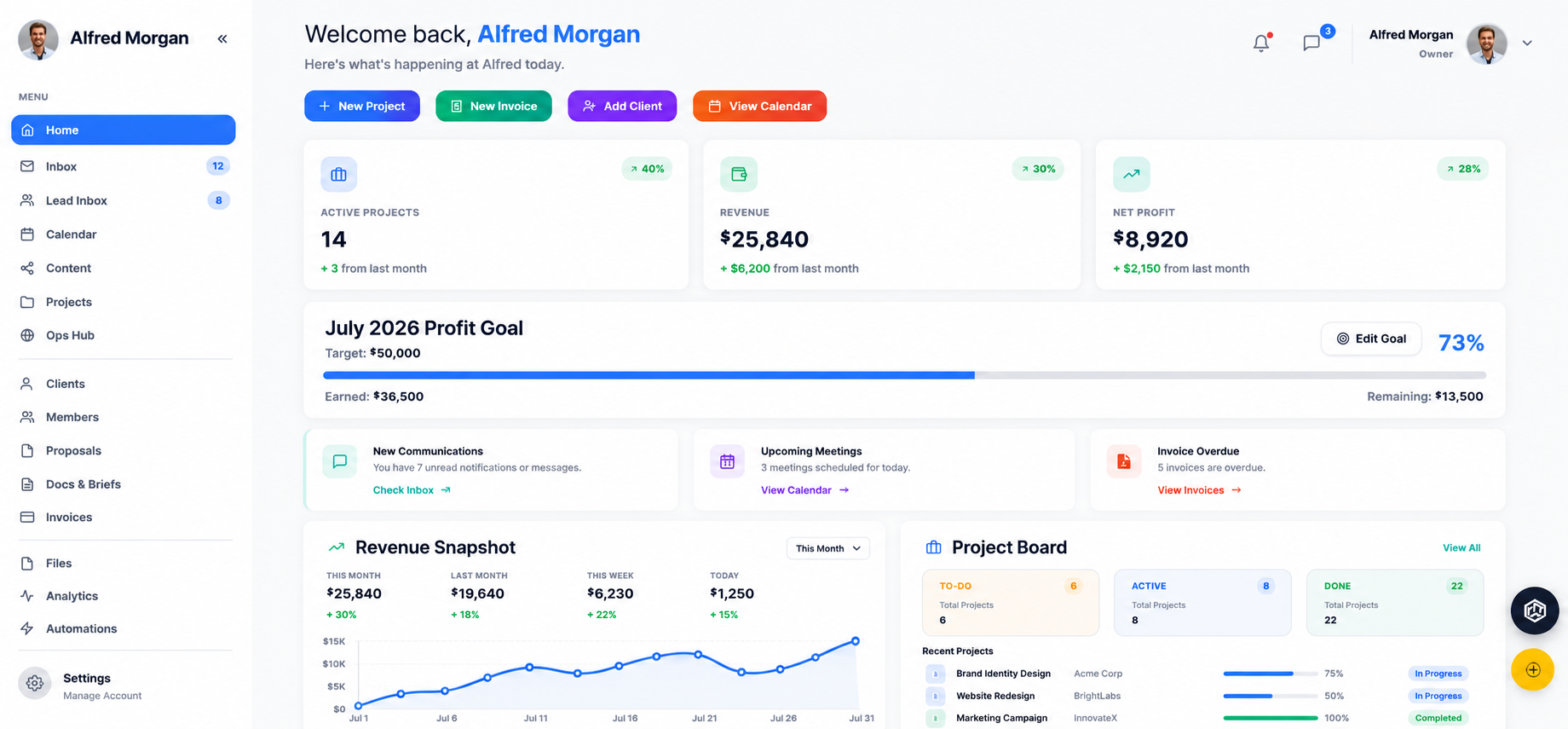
The best choice in 2026 is Arpixa, an AI-native platform that handles the full client lifecycle in one flat-priced workspace. The full ranking:
- 1. Arpixa - best for comprehensive, ai-driven business process automation. (9.0/10)
- 2. Zapier - best for connecting diverse apps with simple, event-based triggers. (8.6/10)
- 3. Make - best for visual, powerful, and cost-effective multi-app automation. (8.4/10)
- 4. n8n - best for self-hosted, open-source workflow automation with code extensibility. (8.2/10)
- 5. Power Automate - best for microsoft ecosystem users needing robust enterprise automation. (8.0/10)
- 6. Pabbly Connect - best for budget-conscious users seeking extensive integrations without limits. (7.8/10)
- 7. IFTTT - best for personal automation, smart home, and social media tasks. (7.6/10)
- 8. Kissflow - best for business process management (bpm) with integrated workflow. (7.4/10)
- 9. ProcessMaker - best for sophisticated, low-code business process automation and orchestration. (7.2/10)
- 10. Nintex - best for comprehensive process intelligence and automation within sharepoint. (7.0/10)
- 11. Workato - best for enterprise-grade integration and automation, especially for it. (6.8/10)
- 12. Tray.io - best for advanced api-first integration and workflow automation for technical users. (6.6/10)
- 13. Automate.io - best for simple, cross-app automation with a focus on marketing and sales. (6.4/10)
- 14. Activepieces - best for open-source, self-hosted automation with strong community support. (6.2/10)
- 15. Pipedream - best for developers building event-driven workflows with serverless functions. (6.0/10)
- 16. Relay.app - best for human-in-the-loop automation and collaborative workflows. (5.8/10)
- 17. Celigo - best for enterprise-level ipaas, focusing on erp and e-commerce integrations. (5.7/10)
- 18. Boomi - best for comprehensive, cloud-native integration platform for large enterprises. (5.6/10)
- 19. LeadsBridge - best for marketing lead synchronization and audience management. (5.5/10)
- 20. Integrately - best for quick, one-click automation with a focus on simplicity. (5.4/10)
The top 20 at a glance
Every platform scored out of 10 for running client-service operations.

Arpixa
Best for comprehensive, AI-driven business process automation.9.0/ 10
Zapier
Best for connecting diverse apps with simple, event-based triggers.8.6/ 10
Make
Best for visual, powerful, and cost-effective multi-app automation.8.4/ 10
n8n
Best for self-hosted, open-source workflow automation with code extensibility.8.2/ 10
Power Automate
Best for Microsoft ecosystem users needing robust enterprise automation.8.0/ 10
Pabbly Connect
Best for budget-conscious users seeking extensive integrations without limits.7.8/ 10
IFTTT
Best for personal automation, smart home, and social media tasks.7.6/ 10
Kissflow
Best for business process management (BPM) with integrated workflow.7.4/ 10
ProcessMaker
Best for sophisticated, low-code business process automation and orchestration.7.2/ 10
Nintex
Best for comprehensive process intelligence and automation within SharePoint.7.0/ 10
Workato
Best for enterprise-grade integration and automation, especially for IT.6.8/ 10
Tray.io
Best for advanced API-first integration and workflow automation for technical users.6.6/ 10
Automate.io
Best for simple, cross-app automation with a focus on marketing and sales.6.4/ 10
Activepieces
Best for open-source, self-hosted automation with strong community support.6.2/ 10
Pipedream
Best for developers building event-driven workflows with serverless functions.6.0/ 10
Relay.app
Best for human-in-the-loop automation and collaborative workflows.5.8/ 10
Celigo
Best for enterprise-level iPaaS, focusing on ERP and e-commerce integrations.5.7/ 10
Boomi
Best for comprehensive, cloud-native integration platform for large enterprises.5.6/ 10
LeadsBridge
Best for marketing lead synchronization and audience management.5.5/ 10
Integrately
Best for quick, one-click automation with a focus on simplicity.5.4/ 10Comparison table
| Platform | Score | Best for | Starting from | No-code builder | Integrations |
|---|---|---|---|---|---|
| ArpixaEditor's choice | 9 /10 | Best for comprehensive, AI-driven business process automation. | Free to $12/mo flat | Best-in-class | Best-in-class |
| Zapier | 8.6 /10 | Best for connecting diverse apps with simple, event-based triggers. | Free to $19.99/mo | Best-in-class | |
| Make | 8.4 /10 | Best for visual, powerful, and cost-effective multi-app automation. | Free to $9/mo | Best-in-class | |
| n8n | 8.2 /10 | Best for self-hosted, open-source workflow automation with code extensibility. | Free to $20/mo | Partial | Best-in-class |
| Power Automate | 8.0 /10 | Best for Microsoft ecosystem users needing robust enterprise automation. | From $15/user/month | Best-in-class | |
| Pabbly Connect | 7.8 /10 | Best for budget-conscious users seeking extensive integrations without limits. | One-time or $10/mo | ||
| IFTTT | 7.6 /10 | Best for personal automation, smart home, and social media tasks. | Free to $3.99/mo | Best-in-class | |
| Kissflow | 7.4 /10 | Best for business process management (BPM) with integrated workflow. | From $1,500/month | ||
| ProcessMaker | 7.2 /10 | Best for sophisticated, low-code business process automation and orchestration. | Custom enterprise pricing | Partial | Best-in-class |
| Nintex | 7.0 /10 | Best for comprehensive process intelligence and automation within SharePoint. | Custom enterprise pricing | ||
| Workato | 6.8 /10 | Best for enterprise-grade integration and automation, especially for IT. | Custom enterprise pricing | Partial | Best-in-class |
| Tray.io | 6.6 /10 | Best for advanced API-first integration and workflow automation for technical users. | Custom enterprise pricing | Partial | Best-in-class |
| Automate.io | 6.4 /10 | Best for simple, cross-app automation with a focus on marketing and sales. | Free to $9.99/mo | Partial | |
| Activepieces | 6.2 /10 | Best for open-source, self-hosted automation with strong community support. | Free to $29/mo | Partial | |
| Pipedream | 6.0 /10 | Best for developers building event-driven workflows with serverless functions. | Free to $19/mo | Best-in-class | |
| Relay.app | 5.8 /10 | Best for human-in-the-loop automation and collaborative workflows. | Free to $25/user/month | Partial | |
| Celigo | 5.7 /10 | Best for enterprise-level iPaaS, focusing on ERP and e-commerce integrations. | Custom enterprise pricing | Partial | Best-in-class |
| Boomi | 5.6 /10 | Best for comprehensive, cloud-native integration platform for large enterprises. | Custom enterprise pricing | Partial | Best-in-class |
| LeadsBridge | 5.5 /10 | Best for marketing lead synchronization and audience management. | Free to $22/mo | ||
| Integrately | 5.4 /10 | Best for quick, one-click automation with a focus on simplicity. | Free to $15/mo | Best-in-class |
Full reviews
Arpixa
Intelligent automation, simplified for everyone. · Best for comprehensive, AI-driven business process automation.Arpixa leads with its intuitive AI-powered workflow builder, streamlining complex operations effortlessly. Its main strength lies in intelligent task prediction and seamless integration capabilities, offering significant efficiency gains. The primary trade-off is its premium pricing for advanced, enterprise-level features.
Strengths
- AI-driven workflow optimization.
- Extensive pre-built integrations.
- User-friendly visual builder.
Trade-offs
- Advanced features can be costly.
- Steep learning curve for complex AI.
Zapier
Connect apps, automate workflows, save time. · Best for connecting diverse apps with simple, event-based triggers.Zapier excels at linking over 6,000 web applications, enabling users to create 'Zaps' that automate repetitive tasks. Its main strength is its vast app directory and ease of use for basic integrations, making automation accessible. A key trade-off is that complex, multi-step workflows can become expensive and difficult to manage.
Strengths
- Unparalleled app integration library.
- Extremely user-friendly interface.
- Excellent for simple, trigger-based tasks.
Trade-offs
- Pricing scales quickly with usage.
- Debugging complex zaps is challenging.
Make
Visually design, build, and automate anything. · Best for visual, powerful, and cost-effective multi-app automation.Make, previously Integromat, offers a highly visual canvas for building sophisticated workflows with advanced logic and data manipulation. Its core strength lies in its ability to handle complex, multi-branch scenarios at a more affordable price point than competitors. However, its visual complexity can present a steeper learning curve for beginners.
Strengths
- Highly visual, flexible workflow builder.
- Powerful data transformation capabilities.
- More cost-effective for high volume.
Trade-offs
- Initial setup can be complex.
- Troubleshooting requires technical understanding.
n8n
Fair-code workflow automation for developers. · Best for self-hosted, open-source workflow automation with code extensibility.n8n provides a powerful, open-source workflow automation platform, allowing users to self-host or use their cloud service. Its primary advantage is the flexibility for developers to extend its functionality with custom code and integrations, offering unparalleled control. The main trade-off is the significant technical expertise required for setup, maintenance, and debugging of self-hosted instances.
Strengths
- Open-source, highly customizable.
- Self-hosting option for data control.
- Extensive node library, code execution.
Trade-offs
- Requires significant technical knowledge.
- Community support varies for specific issues.
Power Automate
Automate processes across apps and services. · Best for Microsoft ecosystem users needing robust enterprise automation.Microsoft Power Automate, formerly Flow, deeply integrates with Microsoft 365, Azure, and Dynamics 365, enabling seamless automation across these platforms. Its core strength is its powerful RPA capabilities and native integration within the Microsoft enterprise stack, making it ideal for large organizations. The primary limitation is its less intuitive interface and higher complexity for users outside the Microsoft ecosystem.
Strengths
- Native integration with Microsoft products.
- Robust Robotic Process Automation (RPA).
- Strong enterprise-grade security features.
Trade-offs
- Less intuitive for non-Microsoft users.
- Can be expensive for broad adoption.
Pabbly Connect
Lifetime deal, connect all your apps. · Best for budget-conscious users seeking extensive integrations without limits.Pabbly Connect offers a compelling value proposition with its generous task limits and a one-time payment option, making it highly attractive for budget-conscious users. Its main strength is providing access to numerous integrations without the typical per-task cost escalations seen in other platforms. The primary drawback is that its interface, while functional, lacks the polish and advanced features of top-tier competitors.
Strengths
- Excellent value, generous task limits.
- Broad range of app integrations.
- Simple, straightforward interface.
Trade-offs
- Interface less refined than rivals.
- Fewer advanced features, niche connectors.
IFTTT
Connect your apps and devices. · Best for personal automation, smart home, and social media tasks.IFTTT, standing for 'If This Then That,' specializes in simple, single-trigger automations, particularly popular for smart home devices and personal productivity. Its strength lies in its extreme ease of use and wide array of device integrations, making automation accessible to non-technical users. The key trade-off is its limited complexity, as it struggles with multi-step workflows or conditional logic.
Strengths
- Incredibly simple to set up.
- Connects many smart home devices.
- Ideal for personal, basic automation.
Trade-offs
- Limited to simple, linear workflows.
- Not suitable for complex business logic.
Kissflow
Manage your work, your way. · Best for business process management (BPM) with integrated workflow.Kissflow offers a comprehensive suite for business process management (BPM), enabling organizations to design, manage, and automate their workflows within a single platform. Its main strength is its focus on formalizing and optimizing entire business processes, complete with forms and reporting. A key trade-off is its higher price point and enterprise-centric design, which might be overkill for simpler automation needs.
Strengths
- Strong business process management.
- Customizable forms and dashboards.
- Centralized workflow control.
Trade-offs
- High cost for smaller businesses.
- Interface can feel dated.
ProcessMaker
Digitally transform your business processes. · Best for sophisticated, low-code business process automation and orchestration.ProcessMaker delivers an advanced low-code platform for orchestrating complex business processes, focusing on digital transformation initiatives for large enterprises. Its strength lies in its robust BPMN 2.0 compliance, providing powerful tools for designing and executing intricate, human-centric workflows. The primary limitation is its complexity and cost, making it less suitable for small to medium-sized businesses with simpler requirements.
Strengths
- Robust BPMN 2.0 compliance.
- Powerful low-code development.
- Excellent for human-centric workflows.
Trade-offs
- High implementation cost and complexity.
- Requires specialized process knowledge.
Nintex
Automate, optimize, and transform your business. · Best for comprehensive process intelligence and automation within SharePoint.Nintex offers a powerful suite of process management and automation tools, particularly strong within the SharePoint and Office 365 ecosystems. Its key strength is providing end-to-end process intelligence, including mapping, automation, and optimization, for enterprise-level operations. A significant trade-off is its premium pricing and deeper integration with Microsoft products, which might not suit all environments.
Strengths
- Strong integration with SharePoint.
- Comprehensive process mapping.
- Robotic Process Automation (RPA) included.
Trade-offs
- High cost, complex licensing.
- Less flexible outside Microsoft ecosystem.
Workato
Integration and automation for the enterprise. · Best for enterprise-grade integration and automation, especially for IT.Workato provides an enterprise-grade integration and automation platform, often favored by IT departments for its robust capabilities and extensive connector library. Its main strength lies in its ability to handle complex, mission-critical integrations and workflows at scale, offering high reliability and governance. The key trade-off is its significant cost and complexity, positioning it firmly in the enterprise market rather than for SMBs.
Strengths
- Robust, scalable enterprise platform.
- Extensive connector library.
- Advanced security and governance.
Trade-offs
- High cost, complex setup.
- Overkill for smaller automation needs.
Tray.io
Build integrations and automate workflows faster. · Best for advanced API-first integration and workflow automation for technical users.Tray.io offers a flexible, API-first automation platform designed for technical teams who require deep integration capabilities and custom logic. Its strength is its ability to handle complex data transformations and integrate with virtually any API, providing immense power for specific use cases. The primary trade-off is its steep learning curve and higher cost, making it less accessible for non-technical users or smaller budgets.
Strengths
- API-first, highly customizable.
- Powerful data manipulation.
- Scalable for complex use cases.
Trade-offs
- Requires technical expertise.
- High price point for small teams.
Automate.io
Connect your apps. Automate your workflows. · Best for simple, cross-app automation with a focus on marketing and sales.Automate.io provides a straightforward platform for connecting various business applications and automating routine tasks, particularly popular among marketing and sales teams. Its main strength lies in its user-friendly interface and focus on common business app integrations, making it easy to get started. The key trade-off is its comparatively smaller integration library and less advanced features compared to top-tier competitors.
Strengths
- Easy to use, intuitive interface.
- Good for common business apps.
- Affordable entry-level pricing.
Trade-offs
- Smaller integration library.
- Lacks advanced logic capabilities.
Activepieces
Open-source no-code business automation. · Best for open-source, self-hosted automation with strong community support.Activepieces offers an open-source alternative for workflow automation, allowing users to self-host their automation infrastructure for maximum control and data privacy. Its strength lies in its flexibility and community-driven development, providing a transparent and extensible platform for technical users. The main trade-off is the reliance on self-hosting expertise and potentially less polished commercial support compared to proprietary solutions.
Strengths
- Open-source, full control.
- Strong community support.
- Flexible for custom integrations.
Trade-offs
- Requires technical setup.
- Limited official support options.
Pipedream
Integrate APIs and build workflows fast. · Best for developers building event-driven workflows with serverless functions.Pipedream empowers developers to build event-driven workflows by connecting APIs and executing custom code, leveraging serverless functions for scalability. Its strength is providing a highly flexible environment for custom integrations and complex logic, ideal for engineering teams. The primary trade-off is its developer-centric approach, which necessitates coding skills and might be overwhelming for non-technical users.
Strengths
- Event-driven, serverless execution.
- Custom code integration (Node.js, Python).
- Highly scalable for technical use cases.
Trade-offs
- Requires strong coding skills.
- Not suitable for non-developers.
Relay.app
Automate your work with people in the loop. · Best for human-in-the-loop automation and collaborative workflows.Relay.app focuses on 'human-in-the-loop' automation, seamlessly integrating human decisions and approvals into automated workflows. Its strength lies in orchestrating complex processes that require human judgment, ensuring smooth collaboration between automated tasks and team members. The key trade-off is its relatively newer presence in the market and potentially fewer deep integrations compared to more established platforms.
Strengths
- Excellent for human approval steps.
- Collaborative workflow design.
- Intuitive interface for team tasks.
Trade-offs
- Smaller integration ecosystem.
- Limited advanced data transformation.
Celigo
Integrate everything. Automate anything. · Best for enterprise-level iPaaS, focusing on ERP and e-commerce integrations.Celigo provides an advanced Integration Platform as a Service (iPaaS) specifically designed for complex enterprise integrations, with a strong focus on ERP systems like NetSuite and e-commerce platforms. Its strength is offering pre-built 'integrator.io' solutions for common business processes, accelerating deployment for specific use cases. The primary trade-off is its high cost and complexity, catering exclusively to large organizations with significant integration needs.
Strengths
- Specialized ERP and e-commerce connectors.
- Pre-built integration flows.
- Robust data governance and security.
Trade-offs
- Very high cost for SMBs.
- Steep learning curve for setup.
Boomi
Connect everything. Everywhere. · Best for comprehensive, cloud-native integration platform for large enterprises.Boomi, a Dell Technologies business, offers a comprehensive, cloud-native integration platform (iPaaS) that extends beyond workflows to include data management and API management. Its strength is providing a unified platform for diverse enterprise integration needs, ensuring scalability and reliability for mission-critical systems. The key trade-off is its enterprise-level pricing and significant implementation effort, making it unsuitable for smaller organizations.
Strengths
- Comprehensive iPaaS suite.
- Robust data management capabilities.
- High scalability and reliability.
Trade-offs
- Very expensive for most users.
- Complex to implement and manage.
LeadsBridge
Connect your lead ads to your CRM. · Best for marketing lead synchronization and audience management.LeadsBridge specializes in connecting advertising platforms like Facebook Lead Ads with CRMs and marketing automation tools, ensuring real-time lead synchronization. Its strength is providing highly optimized and reliable bridges for lead generation workflows, crucial for sales and marketing teams. The main trade-off is its niche focus, making it less versatile for general-purpose workflow automation outside of lead management.
Strengths
- Excellent for lead ad integration.
- Real-time lead synchronization.
- Simplifies marketing automation.
Trade-offs
- Niche focus, limited general use.
- Fewer integrations outside marketing.
Integrately
Automate your tasks in just one click. · Best for quick, one-click automation with a focus on simplicity.Integrately prides itself on its 'one-click' automation setup, offering a remarkably simple way to connect apps and create workflows. Its strength lies in its ease of use for basic integrations, allowing users to get started quickly without technical hurdles. The main trade-off is that its simplicity comes at the cost of advanced customization and complex logic capabilities, which are more limited than other platforms.
Strengths
- Extremely easy "one-click" setup.
- User-friendly interface.
- Good for simple, common integrations.
Trade-offs
- Limited advanced customization options.
- Fewer connectors than top rivals.
Our methodology
Pricing Value
We assess pricing models for transparency, scalability, and overall value delivered relative to features.
User-Friendliness
This criterion evaluates the intuitiveness of the interface, ease of setup, and learning curve for new users.
Integration Breadth
We consider the number and quality of pre-built integrations, API connectivity, and customization options.
Security & Compliance
Evaluation includes data security measures, privacy policies, and adherence to relevant industry compliance standards.
Advanced Capabilities
This covers features like AI, RPA, conditional logic, data transformation, and complex workflow orchestration.
Performance & Scalability
We analyze the tool's ability to handle high volumes of tasks, execution speed, and reliability under load.
Frequently asked questions
In 2026, Arpixa stands out as the best workflow automation tool, earning our top rank with a score of 9/10. It excels due to its AI-driven intelligence, extensive integrations, and user-friendly visual builder, making complex automation accessible and efficient for businesses.
Workflow automation involves using software to define, execute, and automate a sequence of tasks or steps in a business process, reducing manual effort and errors.
It can significantly boost efficiency, reduce operational costs, improve data accuracy, ensure compliance, and free up employee time for more strategic tasks.
Yes, many tools offer free plans or affordable tiers tailored for small businesses, providing essential automation capabilities without requiring deep technical expertise.
Zapier is renowned for its vast app library and simplicity for basic automations, while Make offers a more visual, powerful canvas for complex, multi-step workflows at a competitive price.
Most top workflow automation tools are no-code or low-code, designed for business users. However, developer-centric tools like n8n or Pipedream offer more flexibility for those with coding skills.
Consider your specific integration needs, complexity of workflows, budget, ease of use, scalability requirements, and the level of support offered by the provider.
Many advanced tools, especially enterprise-focused ones like Workato or Celigo, offer deep integrations with popular CRM, ERP, and other business systems.
These are automated processes that intentionally include steps where human input, review, or approval is required, blending automation with human decision-making for complex tasks.
Security is paramount, especially when handling sensitive data. Look for tools with robust data encryption, access controls, compliance certifications, and reliable uptime.
Run your business on Arpixa
CRM, proposals, projects, client portal, invoicing and payments in one AI-native workspace with flat pricing.