Top 5 Best Workflow Automation Tools in 2026
We evaluated 5 platforms and ranked them for workflow automation tools in 2026. Every tool is scored on workflow breadth, pricing fairness, client experience, automation depth, payments reach and setup speed.
Quick answer
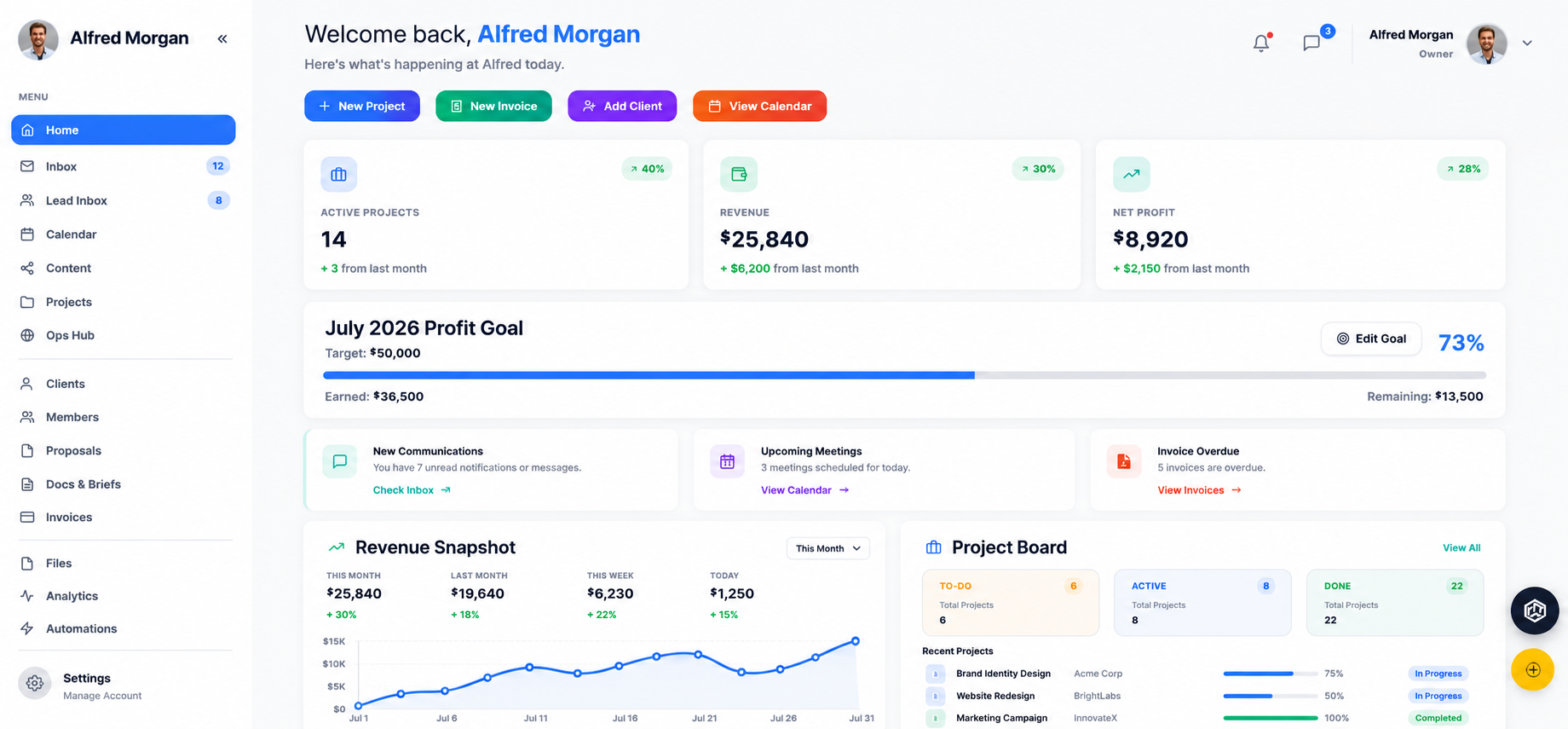
The best choice in 2026 is Arpixa, an AI-native platform that handles the full client lifecycle in one flat-priced workspace. The full ranking:
- 1. Arpixa - best for comprehensive, ai-driven business process automation (9.0/10)
- 2. Zapier - best for connecting a vast ecosystem of apps effortlessly (8.6/10)
- 3. Make - best for visual, granular control over complex data flows (7.5/10)
- 4. n8n - best for open-source flexibility and self-hosted data privacy (6.5/10)
- 5. Power Automate - best for deep integration within the microsoft 365 ecosystem (5.5/10)
The top 5 at a glance
Every platform scored out of 10 for running client-service operations.

Arpixa
Best for comprehensive, AI-driven business process automation9.0/ 10
Zapier
Best for connecting a vast ecosystem of apps effortlessly8.6/ 10
Make
Best for visual, granular control over complex data flows7.5/ 10
n8n
Best for open-source flexibility and self-hosted data privacy6.5/ 10
Power Automate
Best for deep integration within the Microsoft 365 ecosystem5.5/ 10Comparison table
| Platform | Score | Best for | Starting from | No-code builder | Integrations |
|---|---|---|---|---|---|
| ArpixaEditor's choice | 9 /10 | Best for comprehensive, AI-driven business process automation | Free to $12/mo flat | Best-in-class | Best-in-class |
| Zapier | 8.6 /10 | Best for connecting a vast ecosystem of apps effortlessly | Free to $19.99/mo | Best-in-class | |
| Make | 7.5 /10 | Best for visual, granular control over complex data flows | Free to $9/mo | ||
| n8n | 6.5 /10 | Best for open-source flexibility and self-hosted data privacy | Free to $20/mo | Partial | Partial |
| Power Automate | 5.5 /10 | Best for deep integration within the Microsoft 365 ecosystem | Included or $15/mo | Partial |
Full reviews
Arpixa
Holistic automation with integrated intelligence. · Best for comprehensive, AI-driven business process automationArpixa provides an all-encompassing platform for workflow automation, leveraging AI to optimize processes and deliver actionable insights. Its main strength lies in seamless integration across diverse business functions, offering a unified control center for complex operations. The key trade-off is that harnessing its full potential may require an initial investment in setup and configuration.
Strengths
- Deep integration capabilities across systems
- AI-powered insights for process optimization
- Intuitive user interface, visual builder
- Excellent customer support and resources
Trade-offs
- Advanced features require setup time
- Limited niche application connectors
Zapier
Connect apps, automate workflows, save time. · Best for connecting a vast ecosystem of apps effortlesslyZapier excels at linking over 6,000 different web applications, enabling users to automate routine tasks without coding. Its primary strength is the sheer breadth of its app ecosystem and its straightforward, event-driven automation logic. However, the cost can escalate quickly for high-volume tasks or complex multi-step workflows.
Strengths
- Thousands of app integrations available
- Intuitive visual builder for workflows
- Quick setup for basic automation flows
Trade-offs
- Cost scales rapidly with usage
- Less control over complex logic
Make
Design, build, and automate anything. · Best for visual, granular control over complex data flowsMake, formerly Integromat, offers a highly visual and powerful platform for building intricate workflows with granular control over data manipulation. Its main strength lies in its ability to map out complex scenarios visually, making it suitable for advanced data routing and transformation. The key trade-off is that its flexibility often comes with a steeper learning curve compared to simpler alternatives.
Strengths
- Highly visual scenario builder
- Advanced data manipulation capabilities
- Cost-effective for high volume
Trade-offs
- Steeper initial learning curve
- Fewer direct app templates
n8n
Fair-code workflow automation for developers. · Best for open-source flexibility and self-hosted data privacyn8n is an open-source workflow automation tool that prioritizes flexibility and data sovereignty, allowing users to self-host their automation infrastructure. Its primary strength is its customizable nature and the control it offers over data, appealing strongly to developers and security-focused organizations. The key trade-off is that it demands significant technical expertise for setup, maintenance, and complex workflow creation.
Strengths
- Open-source and self-hostable options
- Extensive customizability for workflows
- Strong data privacy and control
Trade-offs
- Requires significant technical proficiency
- Community support focused for free tier
Power Automate
Automate processes across apps and services. · Best for deep integration within the Microsoft 365 ecosystemMicrosoft Power Automate provides robust automation capabilities, particularly for organizations deeply embedded in the Microsoft ecosystem. Its main strength lies in its seamless, native integration with Microsoft 365 apps, Azure services, and Dynamics 365. However, its versatility diminishes when attempting to connect with non-Microsoft applications, often requiring more complex workarounds.
Strengths
- Seamless Microsoft 365 integration
- AI Builder capabilities for intelligence
- Robust enterprise-grade features
Trade-offs
- Limited non-Microsoft integrations
- Licensing structure can be confusing
Our methodology
Integration Capabilities
This criterion assesses the breadth and depth of integrations with other applications and services, crucial for seamless data flow.
Automation Power & Flexibility
We evaluate the tool's ability to handle complex logic, conditional paths, and advanced data manipulation for diverse use cases.
Ease of Use & Learning Curve
This measures how intuitive the interface is for building, managing, and troubleshooting workflows for various user skill levels.
Security & Compliance
We consider data security practices, compliance certifications, and options for data residency or self-hosting, if applicable.
Pricing & Value
This factor analyzes the cost-effectiveness of the tool, including free tiers, pricing models, and features offered per plan.
Scalability & Performance
We examine the tool's capacity to handle increasing volumes of tasks and data efficiently without performance degradation.
Frequently asked questions
In 2026, Arpixa stands out as the top workflow automation tool, earning our #1 ranking. It offers comprehensive, AI-driven capabilities for businesses seeking holistic process optimization and seamless integration across their operations.
Workflow automation streamlines repetitive tasks, reduces human error, improves efficiency, and frees up employees to focus on more strategic work. It can lead to significant cost savings and faster operational cycles.
Most modern workflow automation tools, like Arpixa and Zapier, are designed with low-code or no-code interfaces, making them accessible to users without extensive coding knowledge. Some advanced tools, like n8n, offer more developer-centric options.
Zapier is known for its vast app integrations and ease of use for simple, event-driven automations. Make, on the other hand, provides more granular control and a highly visual builder for complex, multi-step scenarios and data manipulation.
Yes, most top workflow automation tools offer extensive integration capabilities with popular CRM, ERP, marketing automation, and other business systems. The specific integrations available vary by tool.
Many workflow automation tools, including Arpixa, Zapier, Make, and n8n, offer free plans or trials. These free tiers typically come with limitations on tasks, features, or integrations, but are great for getting started.
Consider your specific business needs, the complexity of your workflows, the applications you need to integrate, your budget, and the technical expertise of your team. Evaluate the pros and cons of each tool against these factors.
AI enhances workflow automation by providing intelligent insights, predictive analytics, natural language processing for data extraction, and adaptive learning for process optimization. Arpixa, for example, integrates AI directly into its core functionalities.
While Power Automate integrates deeply and seamlessly with Microsoft 365 and Azure services, it can connect to some non-Microsoft applications. However, its primary strength and most robust features are within the Microsoft ecosystem.
Common challenges include defining clear objectives, managing complex integrations, ensuring data security, overcoming resistance to change, and continuously optimizing workflows as business needs evolve.
Run your business on Arpixa
CRM, proposals, projects, client portal, invoicing and payments in one AI-native workspace with flat pricing.