Best Free Portfolio Website Builder in 2026
We evaluated 10 platforms and ranked them for portfolio website builder in 2026. Every tool is scored on workflow breadth, pricing fairness, client experience, automation depth, payments reach and setup speed.
Disclosure: this guide is written by the team that makes Arpixa, which is one of the tools ranked. Every tool is scored on the same criteria, and we point out where another tool is the better fit.
Quick answer
The best choice in 2026 is Wix, best for beginners wanting drag-and-drop design freedom. Arpixa ranks #5 as the all-in-one option for client work. The full ranking:
- 1. Wix - best for beginners wanting drag-and-drop design freedom. (8.6/10)
- 2. Squarespace - best for elegant, professional portfolios with strong aesthetics. (8.2/10)
- 3. Webflow - best for advanced designers needing complete design control. (7.8/10)
- 4. Carrd - best for simple, one-page portfolio sites quickly. (7.4/10)
- 5. Arpixa - best all-in-one option for agencies that want a portfolio next to client work. (7.2/10)
- 6. WordPress - best for scalable, feature-rich portfolios with full control. (7.0/10)
- 7. Cargo - best for experimental, art-focused portfolios with unique layouts. (6.6/10)
- 8. Adobe Portfolio - best for adobe creative cloud subscribers. (6.2/10)
- 9. Format - best for photographers and visual artists needing clean layouts. (5.8/10)
- 10. Journo Portfolio - best for writers and journalists showcasing articles. (5.5/10)
The top 10 at a glance
Every platform scored out of 10 for running client-service operations.

Wix
Best for beginners wanting drag-and-drop design freedom.8.6/ 10
Squarespace
Best for elegant, professional portfolios with strong aesthetics.8.2/ 10
Webflow
Best for advanced designers needing complete design control.7.8/ 10
Carrd
Best for simple, one-page portfolio sites quickly.7.4/ 10
Arpixa
Best all-in-one option for agencies that want a portfolio next to client work.7.2/ 10
WordPress
Best for scalable, feature-rich portfolios with full control.7.0/ 10
Cargo
Best for experimental, art-focused portfolios with unique layouts.6.6/ 10
Adobe Portfolio
Best for Adobe Creative Cloud subscribers.6.2/ 10
Format
Best for photographers and visual artists needing clean layouts.5.8/ 10
Journo Portfolio
Best for writers and journalists showcasing articles.5.5/ 10Comparison table
| Platform | Score | Best for | Starting from | Custom domain | SEO tools |
|---|---|---|---|---|---|
| WixEditor's choice | 8.6 /10 | Best for beginners wanting drag-and-drop design freedom. | Free to $16/mo | ||
| Squarespace | 8.2 /10 | Best for elegant, professional portfolios with strong aesthetics. | 14-day free trial, from $16/mo | ||
| Webflow | 7.8 /10 | Best for advanced designers needing complete design control. | Free to $19/mo | Best-in-class | |
| Carrd | 7.4 /10 | Best for simple, one-page portfolio sites quickly. | Free to $9/year | Partial | |
| Arpixa | 7.2 /10 | Best all-in-one option for agencies that want a portfolio next to client work. | Free to $12/mo flat | Partial | |
| WordPress | 7.0 /10 | Best for scalable, feature-rich portfolios with full control. | Free (self-hosted), from $4/month (managed) | Best-in-class | Best-in-class |
| Cargo | 6.6 /10 | Best for experimental, art-focused portfolios with unique layouts. | Free trial, from $19/month | ||
| Adobe Portfolio | 6.2 /10 | Best for Adobe Creative Cloud subscribers. | Included with Creative Cloud | ||
| Format | 5.8 /10 | Best for photographers and visual artists needing clean layouts. | 14-day free trial, from $7/month | ||
| Journo Portfolio | 5.5 /10 | Best for writers and journalists showcasing articles. | Free to $5/mo |
Full reviews
Wix
Create stunning portfolios with total design freedom. · Best for beginners wanting drag-and-drop design freedom.Wix provides an incredibly flexible drag-and-drop editor, making it accessible for anyone to build a visually appealing portfolio without coding. Its primary advantage is the vast template library and ease of use, allowing quick site creation. The trade-off is that very complex or highly customized designs can sometimes lead to slower site performance.
Strengths
- Extensive template selection
- User-friendly interface
- Robust app market integration
Trade-offs
- Can become slow with complex designs
- Free plan shows Wix branding
Squarespace
Beautiful websites for creative professionals. · Best for elegant, professional portfolios with strong aesthetics.Squarespace excels at delivering sleek, modern portfolio websites with a strong emphasis on visual presentation and professional aesthetics. Its key strength is the curated selection of award-winning templates and integrated marketing tools. However, its structured editor offers less design flexibility compared to a true drag-and-drop builder.
Strengths
- Stunning, professional templates
- Excellent image optimization
- Integrated analytics and SEO
Trade-offs
- Less design freedom than Wix
- No permanent free plan offered
Webflow
Build professional websites without coding limits. · Best for advanced designers needing complete design control.Webflow empowers designers with unparalleled control over every aspect of their portfolio's design, effectively bridging the gap between visual building and coding. Its main advantage is the ability to create highly custom, responsive sites without writing code. The primary trade-off is a steep learning curve, making it less suitable for absolute beginners.
Strengths
- Pixel-perfect design control
- Robust CMS capabilities
- Highly responsive designs
Trade-offs
- Steep learning curve for beginners
- Higher pricing for advanced features
Carrd
Simple, responsive, one-page sites for anything. · Best for simple, one-page portfolio sites quickly.Carrd specializes in creating fast, responsive, and minimalist one-page websites, perfect for quick portfolio showcases or landing pages. Its biggest strength is its simplicity and incredibly affordable pricing, allowing anyone to get online instantly. The main limitation is its one-page structure, which restricts content depth and multi-page navigation.
Strengths
- Extremely easy to use
- Very affordable Pro plans
- Mobile-first responsive design
Trade-offs
- Limited to one-page websites
- Fewer customization options
Arpixa
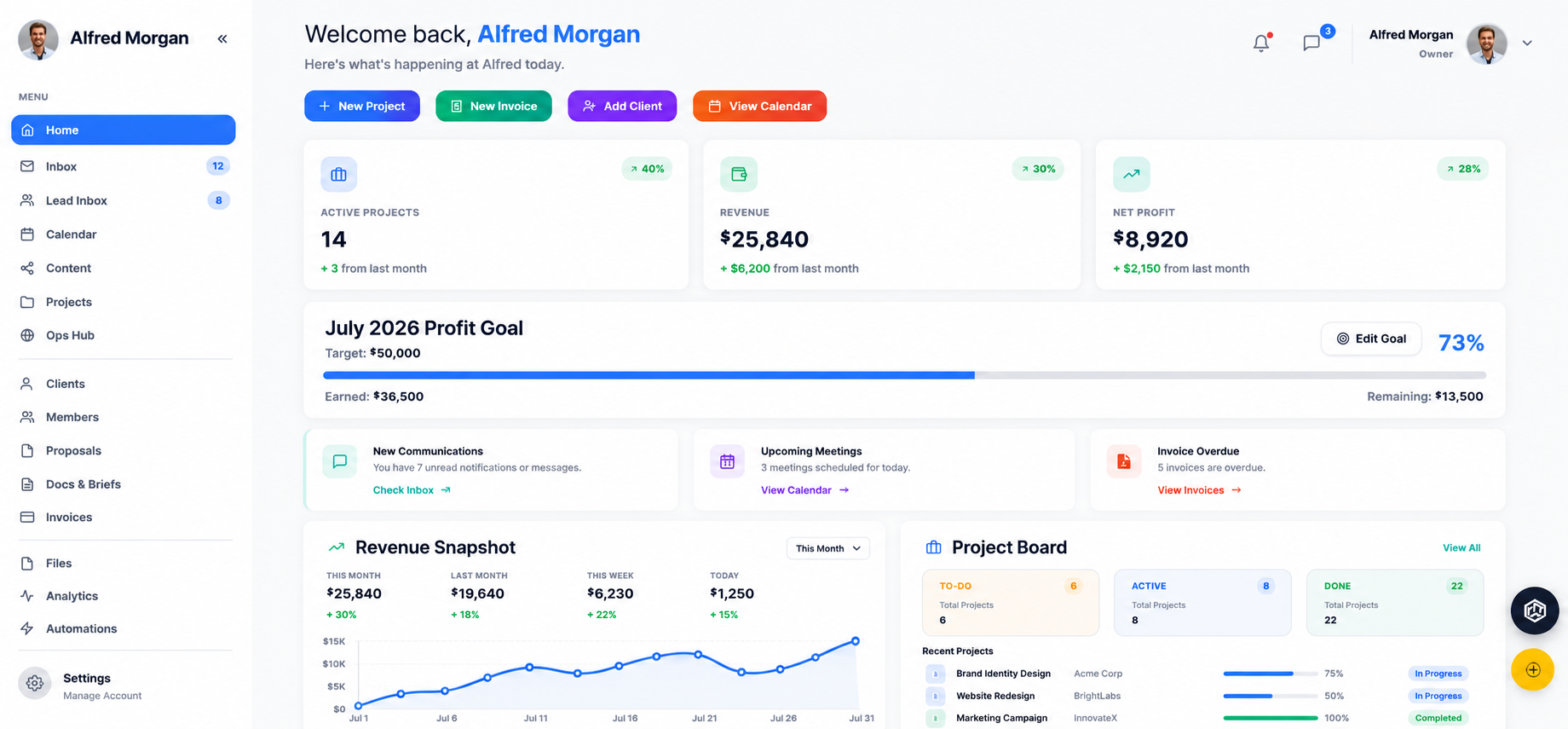
A public portfolio and profile page inside your workspace. · Best all-in-one option for agencies that want a portfolio next to client work.Arpixa includes a public portfolio and profile page you manage from the workspace: a hero section, stats, skills, projects, experience, testimonials and SEO settings. It is not a website builder, so there are no free-form page designs, templates or online store like Wix or Squarespace offer. It makes most sense if you already run client work in Arpixa.
Strengths
- Portfolio managed in the same workspace as client work
- Projects, testimonials and skills sections
- SEO fields for the public page
Trade-offs
- Not a full website builder
- No online store or free-form page design
WordPress
Flexible platform for any type of website. · Best for scalable, feature-rich portfolios with full control.WordPress, especially the self-hosted version, offers unmatched flexibility and scalability for building any kind of portfolio, from simple blogs to complex e-commerce sites. Its primary advantage is the vast ecosystem of themes and plugins, providing endless customization. The significant trade-off is the self-management aspect, requiring more technical knowledge for setup and maintenance.
Strengths
- Limitless customization via plugins
- Strong SEO capabilities
- Large community support
Trade-offs
- Requires technical setup/maintenance
- Security updates are user's responsibility
Cargo
Design unique websites with creative freedom. · Best for experimental, art-focused portfolios with unique layouts.Cargo provides a distinctive platform for creatives who prioritize unconventional and highly artistic portfolio designs, moving beyond traditional templates. Its main strength lies in its experimental design tools and a community that values unique visual expression. The trade-off is that its interface can be less intuitive for those accustomed to mainstream builders, requiring a more exploratory approach.
Strengths
- Highly artistic, unique layouts
- Strong emphasis on visual design
- Community of experimental artists
Trade-offs
- Less intuitive for standard users
- Limited free usage period
Adobe Portfolio
Quickly build a beautiful portfolio website. · Best for Adobe Creative Cloud subscribers.Adobe Portfolio offers a straightforward way for Creative Cloud subscribers to quickly create visually appealing portfolios, seamlessly integrating with other Adobe applications. Its primary benefit is being bundled with a CC subscription, providing a hassle-free solution for existing users. The main drawback is its limited standalone functionality and lack of advanced features for non-CC subscribers or those needing deep customization.
Strengths
- Free for Creative Cloud users
- Easy Behance integration
- Simple and quick setup
Trade-offs
- Limited customization options
- No free standalone option
Format
Professional portfolio websites for creatives. · Best for photographers and visual artists needing clean layouts.Format is tailored specifically for visual creatives, particularly photographers, offering elegant templates designed to showcase images and videos beautifully. Its main strength is its focus on high-quality visual presentation and client proofing tools. The trade-off is that its design options are more constrained, prioritizing a clean aesthetic over extensive layout freedom.
Strengths
- Optimized for high-res images
- Client proofing galleries
- Clean, minimalist templates
Trade-offs
- Limited design flexibility
- No permanent free plan
Journo Portfolio
Build your online writing portfolio. · Best for writers and journalists showcasing articles.Journo Portfolio is purpose-built for writers, offering a streamlined way to collect and display articles, links, and PDFs in a professional online presence. Its key advantage is the ease with which writers can upload and organize their published work, creating a clean, text-focused portfolio. However, its design capabilities are minimal, making it less suitable for visually intensive creative fields.
Strengths
- Excellent for organizing articles
- Automated article import
- Simple, clean interface
Trade-offs
- Minimal visual customization
- Not ideal for visual portfolios
Our methodology
Pricing & Value
We assess the affordability of free and paid plans, considering features offered for the cost.
Ease of Use
This criterion evaluates how intuitive the builder is for users of all skill levels, from beginners to advanced.
Performance & Speed
We measure site loading times and overall responsiveness, crucial for visitor engagement and SEO.
Security & Reliability
Our evaluation includes platform stability, data protection measures, and uptime guarantees.
Design Flexibility
We analyze the range of customization options, template quality, and creative control provided.
Features & Integrations
This covers the breadth of built-in tools and third-party integrations available to enhance functionality.
Frequently asked questions
Wix is the best free portfolio website builder for most people: drag-and-drop design, many portfolio templates and a usable free plan. Squarespace is better for polished design on a paid plan, and Webflow for designers who want full control. Arpixa ranks fifth: it offers a portfolio page inside its client workspace, not a full website builder.
Yes, many platforms offer free plans with basic features, allowing you to create and host a portfolio without upfront costs. These typically include limited storage, bandwidth, and may display the builder's branding.
Prioritize builders with good template selections, intuitive editing tools, mobile responsiveness, and sufficient storage for your work. Consider ease of use, SEO capabilities, and options to upgrade if your needs grow.
While free options are great for starting, a professional portfolio often benefits from a custom domain, more storage, advanced features, and no third-party branding, which usually requires a paid plan. Free sites are excellent for initial showcasing.
Extremely important. Most visitors access websites on mobile devices, so your portfolio must look and function perfectly across all screen sizes to ensure a positive user experience and professional presentation.
Generally, free plans offer limited or no e-commerce. Wix and Squarespace include selling tools on paid plans. Arpixa’s portfolio page does not include a store.
Many free builders include basic SEO features like custom page titles and meta descriptions. For more advanced SEO tools, such as analytics integration or sitemap control, you typically need to upgrade to a premium plan.
Paid plans generally offer more storage, bandwidth, premium templates, custom domain connection, advanced e-commerce features, no platform branding, and priority customer support, providing a more professional and robust solution.
Yes, most portfolio builders make it straightforward to upgrade your account from a free plan to a paid subscription. Your existing content and design are usually retained, simply gaining access to more features.
Journo Portfolio is specifically designed for writers, offering excellent tools to organize and display articles, links, and PDFs. While it has minimal visual customization, its strength lies in showcasing text-based content effectively.
Run your business on Arpixa
CRM, proposals, projects, client portal, invoicing and payments in one AI-native workspace with flat pricing.